
Cataract surgery · Motibindu
Stitch-free cataract surgery, with nothing hidden
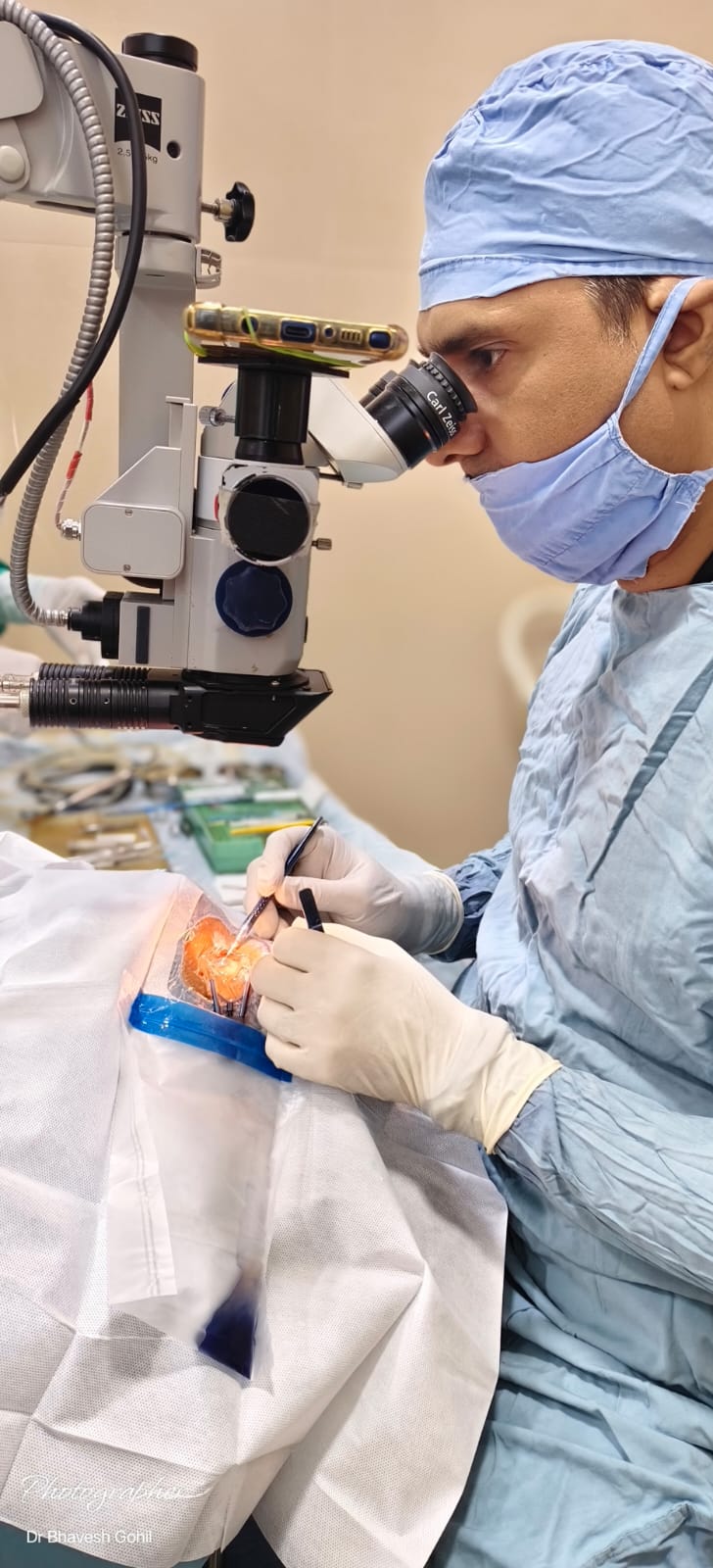
Micro-incision cataract surgery (MICS) by Gold Medalist Dr. Bhavesh J. Gohil, on Swiss Oertli technology. Your family watches live, and your lens is opened in front of you.
What is a cataract?
When the eye’s natural lens turns cloudy
A cataract is a clouding of the natural lens inside the eye. It usually develops slowly with age, and can also be linked to diabetes, steroid use or eye injury. Glasses cannot clear a cataract; surgery replaces the cloudy lens with a clear artificial lens (IOL).
Common signs
- Blurred, cloudy or dim vision
- Glare or haloes around lights, especially while driving at night
- Colours looking faded or yellowish
- Frequent change in glasses number
- Needing more light to read
Is it time for surgery?
There is no need to wait for a cataract to “ripen”. Surgery is usually advised when blurred vision starts to affect daily life: reading, driving, work or moving about safely. Dr. Gohil will examine your eyes and tell you honestly whether you need surgery now or can wait.
Our technique
Micro-incision cataract surgery (MICS)
No injection
Surgery is done under topical anaesthesia using eye drops, so there is no injection around the eye.
No stitches
The cataract is removed through a tiny incision that seals on its own, for faster, more comfortable healing.
Swiss Oertli technology
Advanced Oertli MICS systems give the surgeon fine control, precision and safety during the procedure.
Complete transparency
See exactly what happens
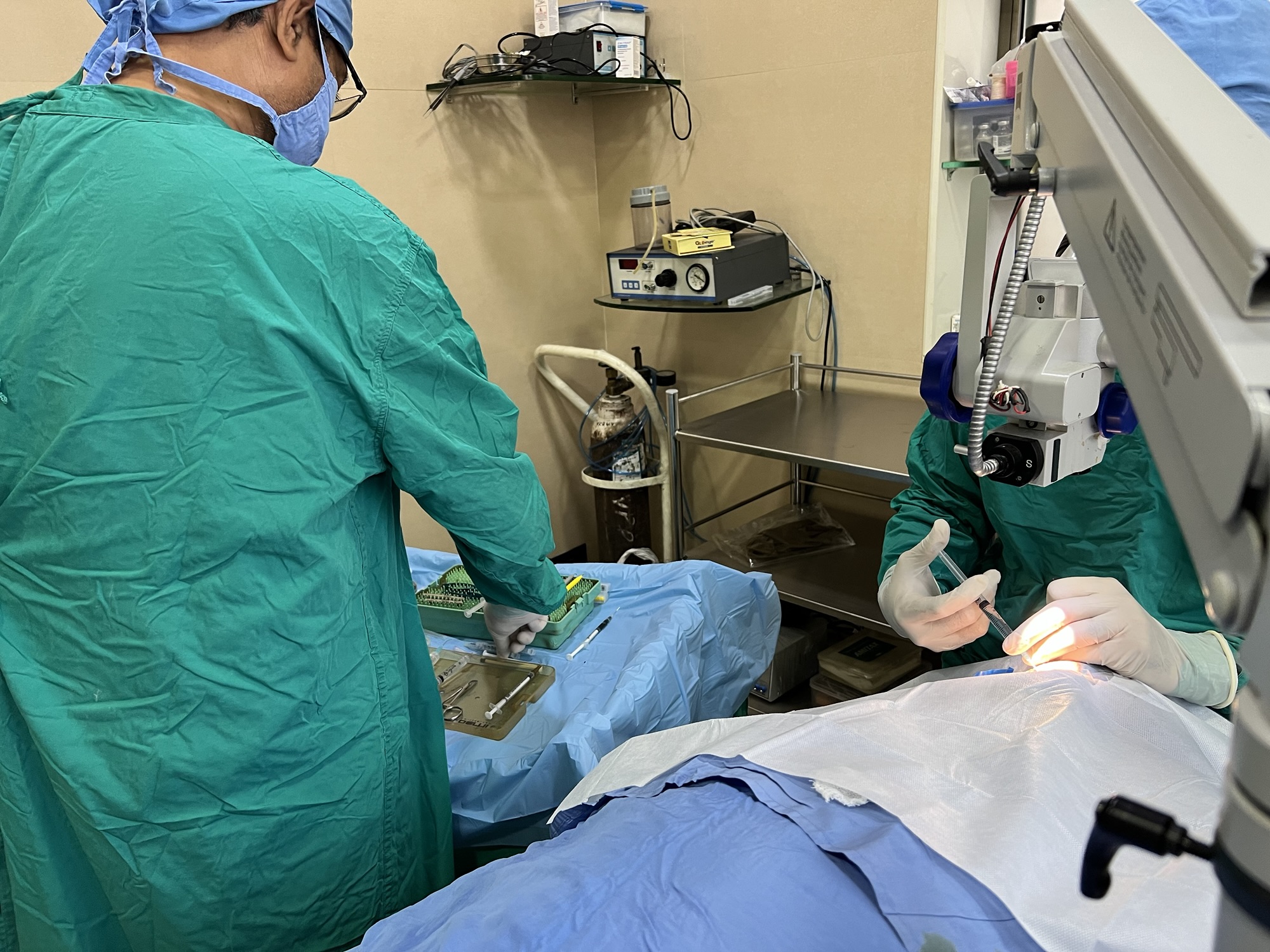
- Lens opened in front of you. The IOL box is unsealed and shown to you and your family before surgery.
- Family watches live. A screen outside the operation theatre shows the surgery in real time.
- Every step explained. Dr. Gohil talks you through the procedure before you go in.
Choosing your lens
Honest guidance, upfront prices
Every lens option is explained, from basic to premium, Indian and imported, with the price before you decide.
Monofocal lens
Gives clear vision for one distance, usually far. Reading glasses are typically needed for near work. A reliable, economical choice for most patients.
Toric lens
Corrects astigmatism (cylindrical number) along with the cataract, for sharper distance vision.
Multifocal / extended-range lens
Aims to reduce dependence on glasses for distance and near. Not suitable for every eye; Dr. Gohil will advise whether it suits you.
Remember: the surgeon’s skill and technology matter more than the lens price. We recommend what suits your eyes, lifestyle (night driving, screen use, reading) and budget, never what earns the most.
Your journey
What to expect
1
Evaluation
Detailed eye check, lens power measurement (biometry) and any tests needed, with lens options and costs explained.
2
Surgery day
Eye-drop anaesthesia, a short stitch-free procedure, and early discharge the same day. Family can watch live.
3
Recovery
Eye drops and follow-up visits as advised. Most people return to light daily activities within a few days.
Cashless & affordable
Insurance and charitable options
Cashless facility
Cashless with most insurance companies, including GIC insurers. Share your policy details and we will help check your coverage.
Charitable cataract surgery
All-inclusive from ₹10,500 through Sight Savers & Hope Charitable Trust, in just 2 visits.
Questions
Cataract surgery FAQs
Is cataract surgery painful?
It is done under eye-drop anaesthesia with no injection and no stitches. Most patients feel only mild pressure and are comfortable throughout.
How long does the surgery take?
The procedure itself is usually short. You will spend a few hours at the centre including preparation and rest, and go home the same day.
Can both eyes be operated together?
Usually each eye is operated on separately, a few days or weeks apart, as advised by your surgeon.
Will I need glasses after surgery?
It depends on the lens chosen. With a monofocal lens most people need reading glasses; multifocal or extended-range lenses can reduce dependence on glasses.
Can a cataract come back?
The cataract cannot come back, but some people develop clouding behind the lens later (posterior capsule opacification), which is treated with a quick laser procedure.
Transparent pricing
After-cataract laser
- YAG laser (for clouding behind the lens, if it develops): ₹2,200 per eye
- Cataract surgery cost depends on the lens chosen, explained upfront
Charges subject to change; please confirm when booking.
Book your cataract evaluation
Meet Dr. Gohil, understand every lens option and its cost, then decide with complete clarity.